

 LinkedIn
A lot of what businesses buy as “AI visibility” is monitoring with a nicer name. Then come the folk remedies: add schema, publish an llms.txt file, rank #1, make more pages. I have seen this operating model before in Google Ads: an expensive report, a long list of problems, and nobody changing the thing that caused them.
Myth 1: “Rank #1 on Google and the AI Overview citation follows”
I understand why SEO leads believe this one. If you spend eighteen months and $40,000 securing the top organic position for a high-intent query, an AI Overview ought to cite your page. It sits above the other results, after all. Surely Google can see it.
But organic rank and AI Overview citations are not the same contest. In Conductor’s analysis of 167.8 million Google AI Overview citations, the #1 organic result received an AI Overview citation 24.8% of the time. The rate fell to 10.2% at position 10, while 57% of citations came from outside the organic top 10. An Ahrefs study of 863,000 search result pages found that only 37.9% of cited URLs sat in the top 10. Another 31.2% ranked between positions 11 and 100, and 31.0% ranked beyond position 100 or had no standard organic ranking for that query.
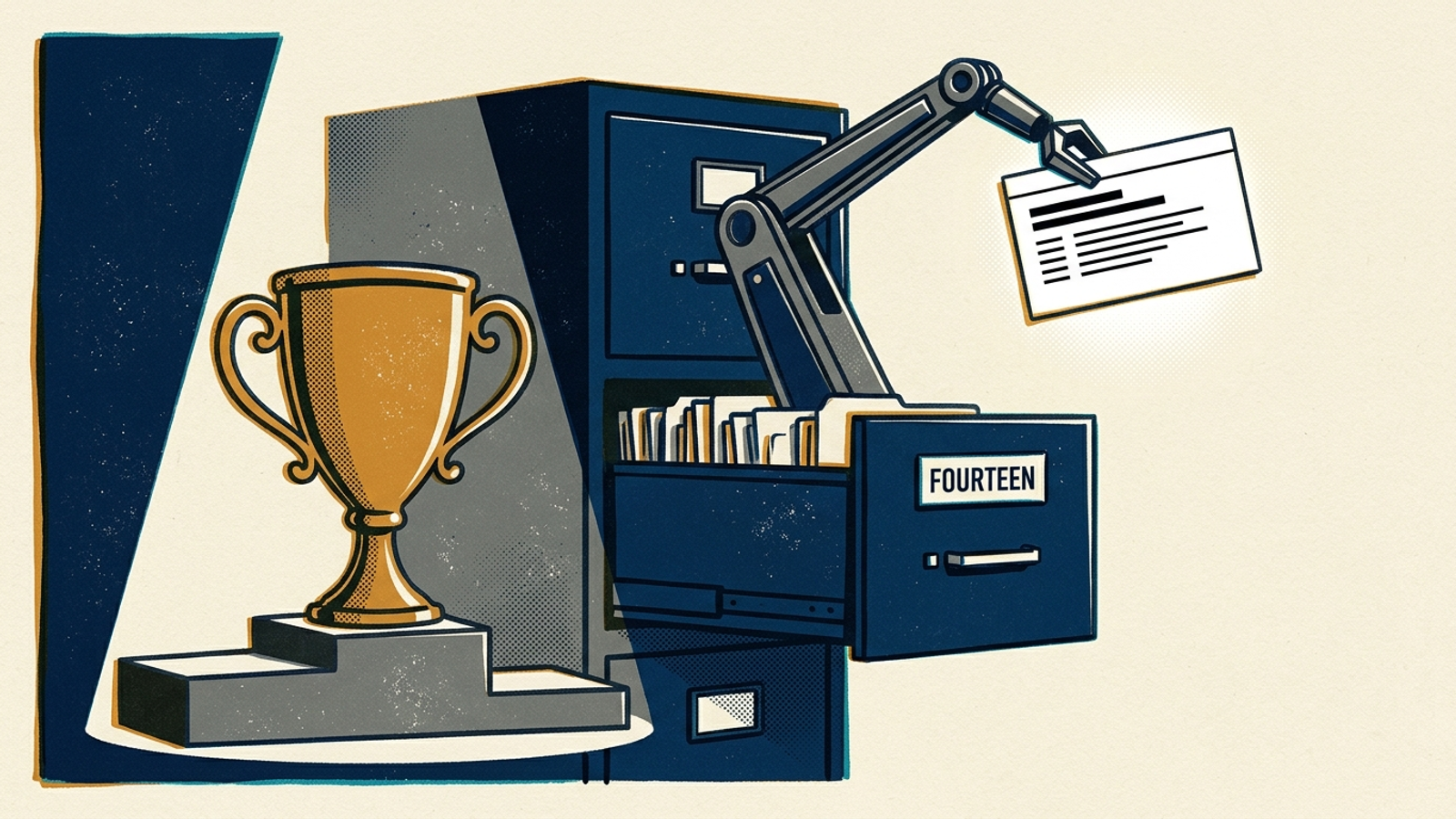
A strong ranking can help people find a page. It does not guarantee that the page contains a passage an answer engine can use. An AI Overview may need a direct answer to one sub-question, not a 4,000-word guide that covers the whole category before getting to the point. That distinction changes the editing job. Instead of asking only whether the page ranks for the broad query, ask whether someone could lift a short passage from it and understand the answer without reading the preceding twelve paragraphs. Keep the ranking work, but give the engine something specific to cite: a clear answer beneath a descriptive heading, with the relevant detail close by.
Myth 2: “Schema markup gets you cited”
Every search-marketing cycle finds a new technical ritual. This one involves injecting thousands of lines of JSON-LD into a site’s header and calling it an AI citation strategy. The pitch is neat: models like structured information, schema is structured information, so schema must earn citations. Neat pitches deserve testing.
One comparison of 1,885 pages that added JSON-LD with 4,000 matched control pages found no statistically meaningful lift. Citations shifted by -4.6% in Google AI Overviews, +2.4% in AI Mode, and +2.2% in ChatGPT. Schema still has its uses, including helping eligible content appear with features such as star ratings, recipe times, and breadcrumbs in search results. That is different from proving it will persuade a generative engine to cite your page.
If an agency is billing for markup audits while the page itself buries the answer, the priorities are backward. I would fix the prose and page structure first: direct answers, useful tables, and headings that tell the reader what follows. If the page says nothing specific about pricing, features, or who the product fits, wrapping that silence in structured data does not solve the underlying problem. Then use schema where it serves its actual purpose. Markup cannot make a vague answer useful. That is the problem with the AEO rituals sold as shortcuts.
Myth 3: “An llms.txt file is the AI equivalent of a sitemap submission”
This one appeals to anyone who would rather ship a file than untangle a messy website. Put a Markdown summary of your business, features, and pricing at the site root; assume AI crawlers will read your carefully written version instead of the pages buyers actually see. Fifteen minutes of work, problem solved.
The crawl evidence gives little reason for that confidence. In a 90-day server-log study covering 62,100 AI crawler requests, OtterlyAI found just 84 requests for the site’s llms.txt file, or 0.1%. An Ahrefs crawler study across 137,000 domains found that 97% of llms.txt files received zero bot traffic. And as Google Search Advocate John Mueller noted on the Search Off the Record podcast, a business describing itself in a text file is not independent validation of its claims.
The tempting part is that the file feels like a completed task. You can publish it, tick a box, and avoid the harder question of whether the pages it summarizes answer buyers clearly. If you want your product facts understood, make them clear on the pages people and crawlers can already reach. If you want your claims believed, a self-written cheat sheet is a poor substitute for what others say about you. Do not confuse publishing a file with earning a citation.
Myth 4: “More pages means more citations”
Cheap content production brought back an old Google playbook: publish a separate article for every slight variation of a question. If one page about software pricing gives an answer engine a chance to find you, twenty must give it twenty chances. That logic ignores what is on those pages.
A retrieval system looking for a usable passage does not benefit from ten articles that repeat the same introduction before circling the answer. Research on 1.2 million search results reported that 44.2% of citations extracted by generative answer engines came from the first 30% of a page. That does not mean every page needs the same template. It does mean the answer should not be hiding beneath three screens of scene-setting.
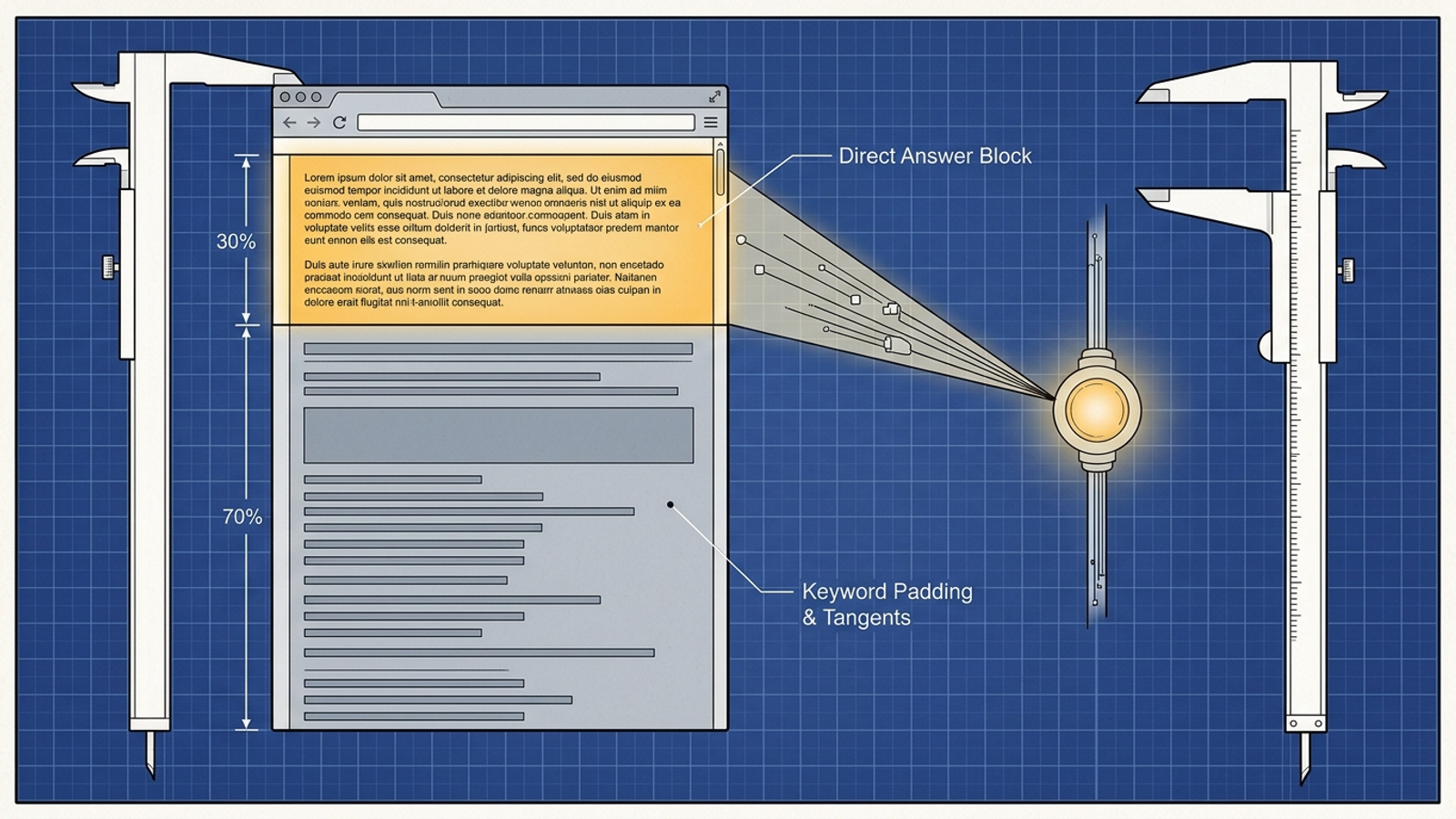
I would rather publish one page that answers the question plainly, adds the relevant numbers, and handles the obvious follow-ups than ten thin variants that make a model hunt for a distinct point. A useful test is to compare those variants side by side. If each makes the same point with a slightly different heading, the extra URLs have not added much for a buyer or an answer engine. More URLs are not more useful answers. Put the strongest information where a reader can find it before losing patience.
Myth 5: “AI answers are random, so they can’t be measured or moved”
Ask ChatGPT for software recommendations at 9:00 AM and again at 9:15 AM. The list may change. I have seen enough variation to understand why teams decide the whole exercise is a dice roll and go back to measuring something that sits still.
But variation in a response is not proof that nothing beneath it can be measured. SparkToro research on AI brand recommendations found different verbatim brand lists in more than 99% of repeated identical queries. That makes a single screenshot a terrible performance report. It does not make repeated observation useless. If you track a defined set of buyer prompts over time, you can look for patterns in which brands appear, which sources get cited, and where your own pages or third-party mentions are absent.
Keep the prompts consistent enough to compare, and record the sources as well as the names in the answer. Otherwise, a changed brand list tells you little about what to edit. You cannot dictate the exact wording of an answer or promise a citation on the next run. You can inspect recurring gaps and change the content or source coverage behind them. Measure patterns, not individual screenshots. Then make a change worth measuring.
Myth 6: “Only your own site matters”
This myth is especially comfortable because you control your own site. Rewrite the service page, polish the H2s, fix the feature comparison, and wait for ChatGPT or Perplexity to notice. When the answer still names competitors, it is tempting to order another round of copy edits.
First check what the answer cited. In Surfer’s analysis of 5.73 million ChatGPT citations, the top 50 cited domains accounted for just 8.4% of citations. Reddit led overall at 0.74%, followed by review platforms including Clutch at 0.45% and G2 at 0.37%. Those figures do not mean every buyer prompt pulls from the same sites. They show why a brand cannot treat its own domain as the entire source landscape.
A vendor page can explain what the product does. A buyer asking for a comparison may also encounter forums, customer reviews, and independent roundups. If those sources omit your business or describe it differently from your polished site, another H2 rewrite will not close that gap. Start with the prompts that matter to a buyer, then look at the cited sources before commissioning another site update. You may find a product fact that needs clarifying on your own page, or an absence your own page cannot fix. Check the sources behind the answers you care about, then work on the missing product facts and third-party presence. Printing better brochures will not help much if the buyer is reading the reviews across the street.
Myth 7: “A visibility dashboard is progress”
This is the hardest one to kill because the purchase sounds responsible. Before you optimize for AI answers, you need to know where you stand. So a team enters fifty buyer prompts into a tracker and watches the trendlines. Three months later, its dashboard says the brand appears in 14% of ChatGPT responses for target category searches, down from 16%. The board asks what happened. The marketing lead opens seven reporting tabs. None changes an answer.
I know the appeal of the dashboard. I used to manage ad accounts by hand, and I would not have wanted to work without measurement. But a report becomes expensive decoration when it stops at the diagnosis. In Google Ads, seeing CPA rise did not add a negative keyword or repair a landing page. In AI search, seeing a citation gap does not write a clearer comparison, make a product fact easier to find, or address the absence of third-party coverage. Observation is not execution.
The right question is not whether a tracker can produce a visibility score. It is what happens after the score moves. If you are deciding whether AI prompt tracking is worth paying for, ask what changes the subscription actually enables. Can someone identify the pages and sources behind a missed citation? Can they make a specific change, log it, and see whether the pattern shifts across repeated prompts? Or have you bought an enterprise login for a diagnostic chore?
That sequence matters more than the neatness of the chart: find the gap, decide what might explain it, change the relevant page or source coverage, and check the same prompts again. A tracker can help with the first and last steps. If nobody owns the work between them, the team is paying to measure a problem it has already agreed to leave alone.

That distinction matters when comparing tools meant to get you featured in Google AI Overviews with tools that only watch for mentions. Some scrape responses and produce reports. The content and technical work still lands on your team’s desk. groas is built around a different operating model: specialized AI models execute search and content optimization continuously, while a named human strategist sets direction and guardrails, with actions logged for accountability. The point is not to give you a more elaborate way to stare at a missed citation. It is to connect what you learn to work that can change the next answer.
I keep coming back to the same test I used on ad accounts: after the report arrives, who changes the thing that is broken? If the answer is still “you, once you have time,” you did not buy AI visibility work. You bought a better seat for watching yourself get skipped.